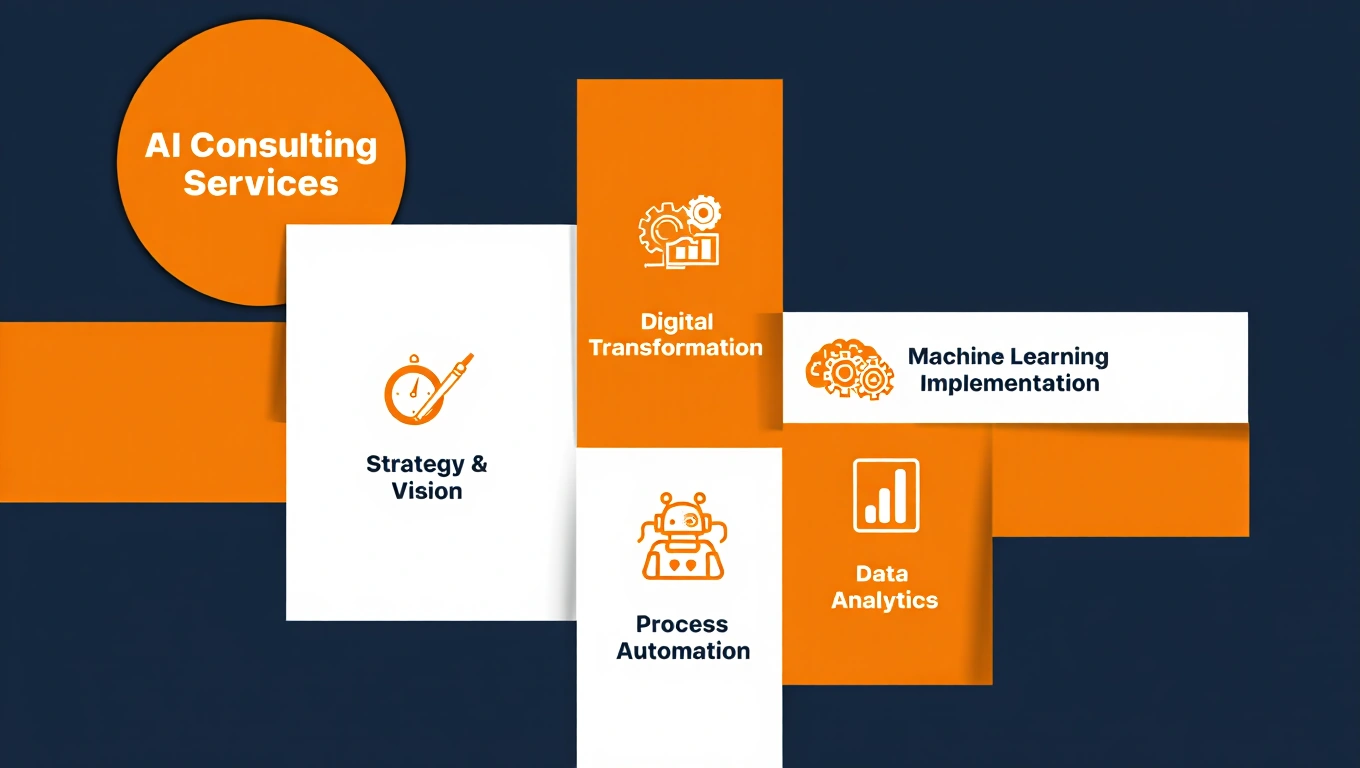
LLM consulting for enterprises is a service where AI specialists help organizations make better decisions about how they incorporate Large Language Models (ChatGPT, Gemini, Claude) into their internal and external operations. The global AI consulting industry is currently valued at $14 billion and expected to grow to over $72 billion by 2030.
Enterprises pay AI experts to gain access to specialized advice across the full spectrum of LLM usage: from simple decisions (choosing the right model) to complex implementations (custom architecture design, compliance frameworks, and team training). According to Forbes, 72% of enterprises expect to increase LLM spending in 2026, with some companies already allocating $250,000 annually to LLMs.
However, not all implementations succeed. An MIT study found that 95% of generative AI pilots fell short of expectations, not because of technology quality, but because of a learning gap between the tools and the organization. That gap is exactly what LLM consulting aims to close.
What Are the Goals of LLM Consulting for Enterprises?
LLM consulting for enterprises typically focuses on four goals:
- Model selection. Helping companies choose the best Large Language Model for their specific business needs and budget.
- Optimization opportunities. Identifying exactly how LLMs can improve internal and external processes, from customer service to data analysis.
- System integration. Connecting LLMs with existing platforms (CRM, ERP, analytics) through architecture design, similar to what AI integration consulting firms provide.
- Compliance and ethics. Ensuring enterprises use LLMs legally and ethically, in regulated industries like healthcare and finance above all.
What Services Do LLM Consultants Provide?
The most common services include:
Why Is LLM Consulting Important for Enterprises?
Enterprises invest in LLM consulting for four primary reasons:
- Competitive advantage. Expert guidance on AI keeps enterprises ahead of competitors who are experimenting without direction.
- Team development. Consulting instantly raises the LLM expertise of entire teams, faster than hiring individual specialists.
- Mistake prevention. The more you know about LLM implementation, the less likely you are to make errors that cost time and money (wrong model, incompatible platforms, compliance violations).
- Resource efficiency. One-time consulting engagements cost less than hiring full-time LLM experts while delivering the same strategic value.
What Mistakes Can LLM Consulting Help You Avoid?
The most common and costly enterprise LLM mistakes:
- Using the wrong model. This foundational error undermines everything built on top of it.
- Applying LLMs without a clear use case. Adopting AI because it is trendy rather than because it solves a specific problem leads to wasted budget.
- Incompatible platforms. If your LLM and CRM do not work together, daily operations get harder, not easier.
- Ignoring legal and security requirements. Non-compliance with AI laws and ethical guidelines can result in fines and reputation damage.
What Are the Most Common Enterprise LLM Use Cases?
LLM consulting typically results in concrete LLM improvements. The most common use cases by industry:
- Legal: AI-powered legislation summaries that speed up research and ensure compliance.
- Finance: Automated fraud detection and risk analysis tools.
- Customer service: State-of-the-art chatbots that handle support at scale (significant cost savings for large corporations).
- Marketing: Automated copywriting and LLM optimization for AI visibility.
- Retail: Personalized, AI-generated product recommendations.
A real-world example: NRW.Genius, an AI-powered public administration assistant that has been helping German citizens in the North Rhine-Westphalia region since 2024.
What Are the Pros and Cons of LLM Consulting?
Benefits:
- Unlocks new revenue streams via AI products (chatbots, shopping assistants, recommendation engines)
- Increases productivity by automating internal tasks
- Reduces costs by preventing human errors and replacing manual processes
- Enables more efficient AI optimization and integration
- Creates competitive advantage by identifying LLM opportunities before competitors
Challenges:
- Can be too costly for small and medium enterprises, especially when cloud infrastructure or LLM API calls add up
- Difficult to integrate into non-modernized enterprises or companies with highly complex existing systems
- Requires investment in employee training alongside the consulting engagement
- Poor consulting can introduce data privacy and security risks (always verify consultant credentials)
What Are the Current LLM Consulting Market Trends?
The LLM consulting market is growing fast:
The Big Consulting firms (Deloitte, PwC, McKinsey) are themselves heavily invested in AI, both as a service offering and as an internal transformation tool.
Does Your Enterprise Need LLM Consulting?
Consider LLM consulting if:
- Your teams are experimenting with AI but without a coordinated strategy
- You are spending money on LLM subscriptions but not seeing clear ROI
- You operate in a regulated industry and need compliance guidance
- You want to identify AI opportunities your competitors have not yet found
- Your current AI implementation was built ad hoc and needs professional architecture
If your challenge is about getting your brand cited by AI tools (ChatGPT, Perplexity, Gemini), that falls under Generative Engine Optimization rather than LLM consulting. GEO agencies specialize in that niche.
LLM Consulting for Enterprises (FAQ)
What is LLM consulting?
LLM consulting is a professional service that delivers expert advice on how enterprises can use Large Language Models to improve their operations, reduce costs, and create new revenue streams. The global market is valued at $14 billion and projected to reach $72 billion by 2030.
What does LLM stand for?
LLM stands for "Large Language Model," a type of AI system trained on vast amounts of text data to understand and generate human-like language. ChatGPT, Gemini, and Claude are examples of LLMs.
What is the difference between LLM and AI?
LLMs are a specific type of AI technology. AI (Artificial Intelligence) is the broad field of computer science focused on creating intelligent systems. LLMs are deep learning models within AI that specialize in understanding and generating language.
What are typical deliverables from an LLM consulting engagement?
Typical deliverables include Proofs of Concept (PoCs), security audits, team workshops, training materials, model selection reports, architecture design documents, and ongoing optimization guidance.
How much does LLM consulting cost?
Costs vary widely. Small-scale engagements for mid-market companies range from $10,000-$50,000. Enterprise-level consulting with firms like Accenture, Deloitte, or McKinsey can run into hundreds of thousands of dollars annually.