LLM performance improvement services are professional services designed to make Large Language Models like ChatGPT, Gemini, and Claude work better for a specific organization. The improvements range from content-enhancing techniques for AI search visibility to deep technical customization of model behavior, parameters, and datasets.
The demand for these services is growing fast. ChatGPT alone now reaches 883 million monthly users (First Page Sage, January 2026), and 72% of enterprises expect to increase LLM spending in 2026 (Forbes). Yet an MIT study found that 95% of generative AI pilots fell short of expectations, not because the technology failed, but because organizations lacked the expertise to implement it properly. That gap is what LLM performance improvement services exist to close.
Understanding which category you need is the first step to getting value from these services.
What Can LLM Performance Improvement Services Do?
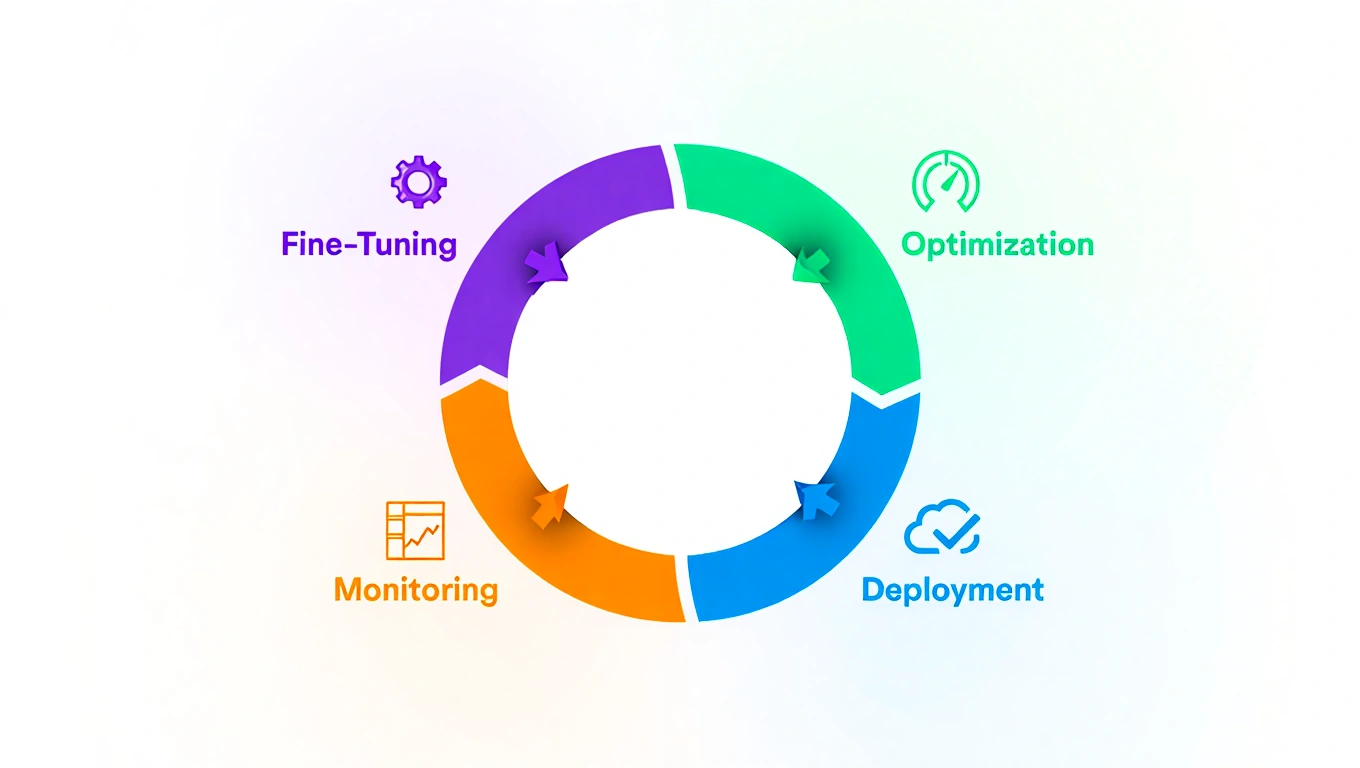
LLM performance improvement services fall into five main categories:
How Do LLM Improvement Services Apply to Digital Marketing?
One specific type of LLM performance improvement is especially relevant to marketers: optimizing content so your brand appears more often in AI-generated answers. This is called Generative Engine Optimization (GEO), and it works like SEO but for Large Language Models instead of Google.
GEO is not about making the AI better. It is about making your brand more visible to the AI. The distinction matters:
- LLM performance improvement = making the AI work better for your organization
- GEO = making your brand appear in AI answers when customers search
Both have value, but they require different services and different expertise. For GEO, check our guides on AI search visibility and how the ChatGPT ranking works.
How Much Do LLM Performance Improvement Services Cost?
LLM improvement services are a relatively high-cost investment, but they pay for themselves by saving time and reducing operational inefficiency:
The ROI depends on how central LLMs are to your operations. For organizations where AI is a core part of daily workflows, these services typically pay for themselves within months through productivity gains and cost reduction.
Where Can You Get LLM Performance Improvement Services?
LLM service providers range from the companies behind the AI models themselves to specialized optimization firms:
For marketing-specific LLM optimization (GEO), specialized GEO agencies handle AI visibility as a distinct service.
How Should You Incorporate LLM Improvement Services?
Follow this 5-step workflow to avoid common implementation mistakes:
- Define objectives. Set specific success metrics before starting. If cost reduction is the priority, every decision should be evaluated against that goal.
- Review your data. Bad data produces bad training. Ensure the information you feed the AI is relevant, accurate, and current.
- Benchmark current performance. Run initial prompts and evaluate how the AI currently performs. This baseline lets you measure improvement later.
- Start simple, then go deep. Begin with prompt engineering and caching. Move to evaluation scripts, quantization, and advanced fine-tuning only after the basics are working.
- Monitor continuously. LLM performance optimization is never finished. Monitor results regularly and adjust as models update and business needs evolve.
Do You Need LLM Performance Improvement Services?
The answer depends on how central LLMs are to your operations:
- Occasional LLM user? The investment may not justify the cost at current market prices. Focus on prompt engineering (free) and wait for prices to drop.
- LLMs are essential to daily operations? Performance improvement services can transform your productivity and justify their cost through time and money saved.
- Your goal is AI search visibility? That is a different problem requiring GEO services, not technical LLM improvement. Both matter, but do not confuse the two.
LLM Performance Improvement Services:
Key Takeaways
- LLM improvement services cover model customization, dataset remodeling, performance optimization, prompt engineering, and RAG.
- Costs range from $1,000/month for maintenance to $100,000 for large-scale fine-tuning.
- The distinction between technical LLM improvement and marketing-focused GEO is critical. They require different expertise.
- AWS, OpenAI, Azumo, Pinecone, and Labelbox are leading providers for technical improvement.
- Follow a 5-step workflow: define objectives, review data, benchmark, implement, monitor.
LLM Performance Improvement Services (FAQ)
How do you improve local LLM performance?
You can improve local LLM performance by using the right model format, optimizing settings for your hardware, applying quantization techniques, and incorporating tools like RAG for external data access.
How do you fine-tune a small LLM?
Fine-tune a small LLM by training it on custom datasets (ideally question-answer pairs) or by updating model weights using Quantized Low-Rank Adaptation (QLoRA), which is efficient enough for consumer hardware.
How do you make LLM responses faster?
Reduce LLM latency by switching to a smaller or more efficient model, shortening prompts to reduce token usage, adjusting sampling settings, or upgrading your hardware's RAM and GPU.
Can LLMs improve themselves?
LLMs cannot change their core weights without external intervention. However, they can self-improve at a smaller level through techniques like auto-prompting, chain-of-thought reasoning, and multi-step output refinement.