AI optimization is the practice of improving how artificial intelligence systems perform, whether by fine-tuning the models themselves or by structuring content so AI systems cite your brand. The term covers two distinct disciplines: technical AI optimization (adjusting model parameters, training data, and infrastructure) and marketing AI optimization, also known as Generative Engine Optimization (GEO), which focuses on increasing brand visibility in AI-generated answers.
AI adoption can add 15% to global GDP (PwC), while a McKinsey report estimates AI optimization creates up to $4.4 trillion in annual value across industries. At the same time, 74% of companies that invested in AI have met or exceeded expectations (Accenture, 2024).
What Are the Two Types of AI Optimization?
AI optimization falls into two categories with different goals, methods, and expertise requirements:
The distinction matters because each type requires different expertise. Technical optimization changes how the AI works. Marketing optimization changes what the AI says about your brand.
What Can Technical AI Optimization Do?
Technical AI optimization covers any improvement applied directly to an AI system. The main areas include:
- Model fine-tuning: Training an existing model on custom datasets to improve performance on specific tasks. A finance firm, for example, can fine-tune an LLM to handle financial analysis with higher accuracy.
- LLM optimization: Adjusting model parameters like temperature, top-p, and token limits to reduce latency, cut costs, and improve output quality.
- RAG (Retrieval-Augmented Generation): Connecting an AI model to external data sources so it can access current information instead of relying only on its training data.
- LLM observability: Tracking metrics like latency, hallucination rates, and cost per query to monitor AI system performance over time.
- Prompt engineering: Creating and refining ChatGPT prompts that produce more accurate, relevant outputs with fewer retries.
How Does Marketing AI Optimization (GEO) Work?
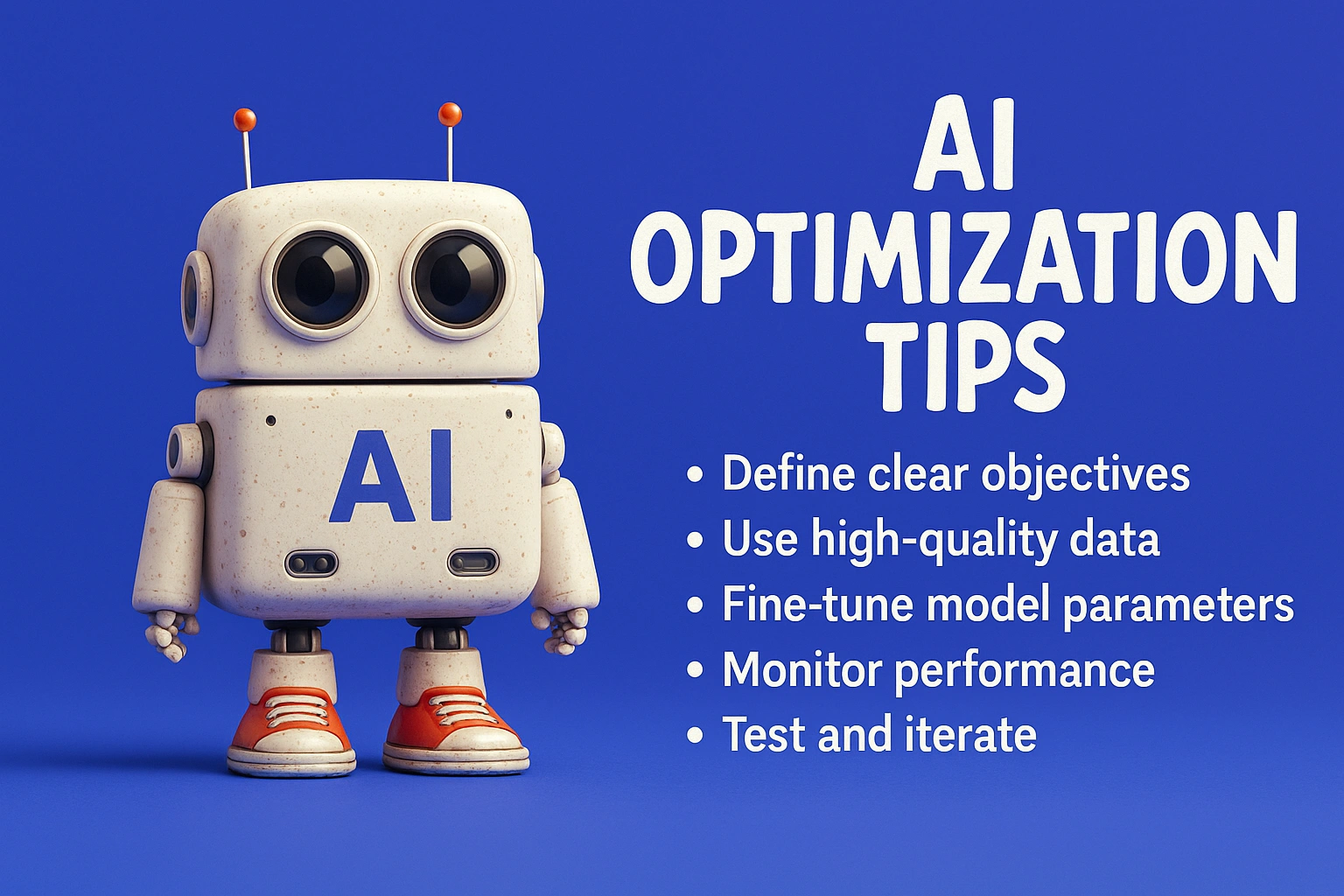
Marketing AI optimization is the practice of structuring content and building online authority so that AI models like ChatGPT, Perplexity, and Gemini cite your brand in their responses. This discipline differs from traditional SEO in several ways:
Five GEO-specific tips that work:
- Think questions, not keywords. Predict the questions your audience will ask AI tools, then publish content that answers those questions directly. Keyword stuffing has no effect on AI citation.
- Publish on platforms AI trusts. Reddit is the most-cited source by AI models by a margin of close to 20% (Visual Capitalist). Wikipedia, Quora, and industry forums also carry weight.
- Show consistency. AI models favor brands that appear consistently across multiple trusted sources. Publishing content that aligns with your core expertise builds the entity recognition AI systems rely on.
- Use clear structures. AI systems extract content more reliably from bullet points, tables, and FAQ sections than from long narrative paragraphs.
- Lead with the answer. Start every content section with a direct answer in the first 1-2 sentences. AI models extract opening statements far more often than conclusions.
For detailed GEO strategies, see our guides on Generative Engine Optimization and ChatGPT SEO.
For an end-to-end playbook on earning recommendations inside AI chat answers, see how to get your brand recommended by AI chatbots.
What Are the Pros and Cons of AI Optimization?
Pros:
- Reach millions of new users. ChatGPT alone has 883 million monthly users (First Page Sage, January 2026). If an AI model recommends your brand, you reach users that Google alone cannot deliver.
- Higher trust than ads. 41% of people trust AI-generated results more than paid advertising (Forbes). An AI citation carries more credibility than a banner ad or sponsored post.
- Early-mover advantage. AI visibility compounds over time. Brands that build authority now will be harder to displace as AI adoption accelerates.
Cons:
- Limited citation slots. Google returns hundreds of results per query. AI models mention 2-5 brands at most, making competition for visibility much higher.
- No guaranteed click-through. AI answers often satisfy the user without linking to your website, meaning you may get brand exposure without direct traffic.
What AI Optimization Services Are Available?
AI Optimization:
Key Takeaways
- AI optimization covers two distinct disciplines: technical (improving how AI works) and marketing (improving what AI says about your brand).
- Marketing AI optimization is also called GEO or AEO. It targets AI-generated answers, not Google rankings.
- AI adoption adds an estimated 15% to global GDP (PwC) and $4.4 trillion in annual value (McKinsey).
- 74% of companies investing in AI have met or exceeded expectations (Accenture).
- The main service categories are GEO agencies, LLM performance services, LLM consulting, and LLM visibility tools.
AI Optimization (FAQ)
What does AI optimization mean?
AI optimization means improving the performance of AI systems. In a technical context, it refers to fine-tuning models, reducing latency, and improving output accuracy. In a marketing context, it refers to Generative Engine Optimization (GEO), which is the practice of structuring content so AI models cite your brand in their answers.
What is the difference between AI optimization and SEO?
AI optimization (GEO) targets AI-generated answers from tools like ChatGPT, Perplexity, and Gemini. SEO targets Google search results. GEO requires question-answer content blocks and third-party authority signals, while SEO relies on keywords and backlinks. Both are important in 2026, but 65% of Google searches now end without a click (Bain), making GEO increasingly relevant.
What is an example of AI optimization?
A finance company fine-tuning an LLM to improve accuracy on financial analysis is technical AI optimization. A SaaS brand structuring its blog content so ChatGPT cites it when users ask "what is the best project management tool?" is marketing AI optimization (GEO). Both fall under the AI optimization umbrella but require different skills and services.
How much does AI optimization cost?
Costs range from $50/month for LLM visibility tools to $100,000 for large-scale model fine-tuning. Marketing AI optimization through a GEO agency typically runs $5,000 to $20,000 per month, depending on scope and industry competition.
Can AI optimization replace SEO?
AI optimization does not replace SEO. The two disciplines serve different channels: SEO drives traffic from Google, while GEO drives citations from AI platforms. The most effective strategy in 2026 combines both, especially as 29% of B2B decision-makers now start vendor research through AI tools (G2, 2025) rather than Google.