An AI model ranking is a structured comparison of Large Language Models based on their capabilities, benchmark performance, and real-world use cases. The AI model market has grown rapidly: ChatGPT alone reaches 883 million monthly users (First Page Sage, January 2026), while 72% of enterprises plan to increase LLM spending in 2026 (Forbes).
This ranking compares the 10 best AI models available in 2026, evaluated by their specific strengths, limitations, pricing, and ideal use cases.
How Do the Top 10 AI Models Compare?
What Makes Each AI Model Stand Out?
1. GPT-5:
Best for General Purpose
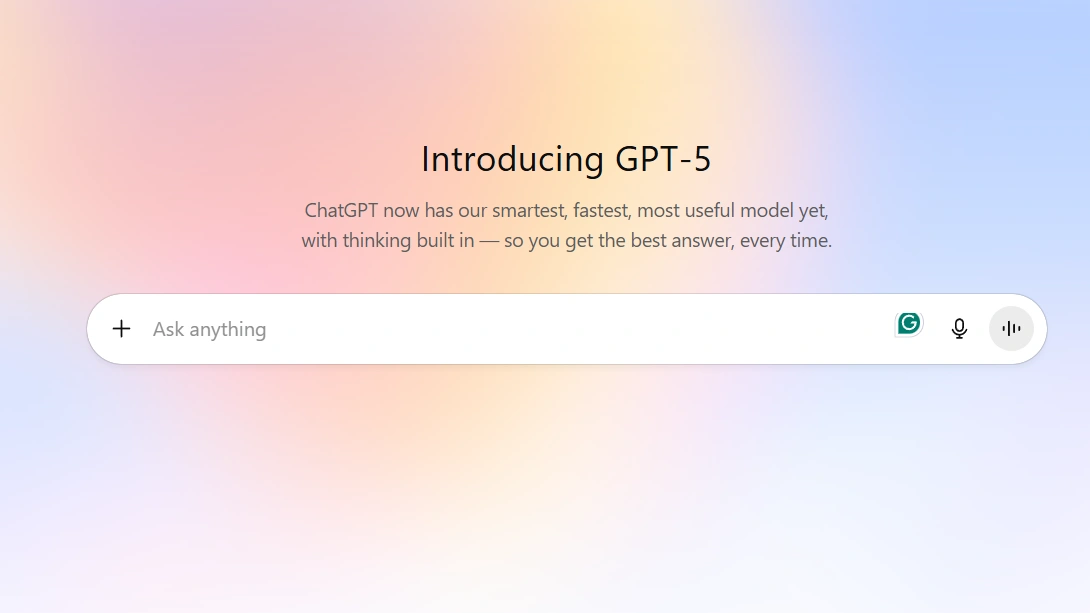
GPT-5 is OpenAI's flagship model released in 2025, designed as a general-purpose LLM that handles text, code, images, and reasoning tasks within a single interface. OpenAI describes it as faster and smarter than GPT-4, with a dedicated GPT-Thinking mode for complex queries that require multi-step reasoning.
GPT-5 also reduces hallucinations compared to GPT-4, which makes it more reliable for professional and enterprise use.
Strengths:
- Handles diverse tasks (text, code, images, reasoning) within one model
- Fast and deep-reasoning modes via GPT-Thinking
- Reduced hallucinations compared to GPT-4 (Mashable)
- Strong for workflows combining multiple LLM tasks
Limitations:
- Cost-per-token is higher than most competitors
- User reviews report auto-routing between modes can be inconsistent
For tips on getting better results from ChatGPT, see our guide to the best ChatGPT prompts.
2. Claude 4:
Best for Coding and Enterprise
Claude 4 is Anthropic's flagship model, widely regarded as the leading AI for coding tasks. Claude 4 can work on extended coding sessions without losing coherence, which sets it apart from models that degrade over long contexts. The Claude Opus 4.5 update added programmatic tool use and workflow features for enterprise teams.
Strengths:
- Top performance in coding benchmarks
- Low hallucination rates suited for corporate environments
- High performance in complex reasoning tasks
- Dynamic tool integration and extended context handling
Limitations:
- Pricing is high for freelancers and small teams
- Safety concerns have been raised regarding certain behavioral patterns
3. Grok 3:
Best for Math and Science
Grok 3 is xAI's flagship model built with a focus on mathematical and scientific reasoning. Grok 3 outperformed competitors including GPT on math- and science-related benchmarks, making it the top choice for researchers, data scientists, and analysts who need precise quantitative outputs.
Grok 3 offers two modes: Think for step-by-step reasoning and DeepSearch for research-heavy queries.
Strengths:
- Outperforms competitors on math and science tasks
- Two specialized modes: Think and DeepSearch
- Fast response times
- Competitive pricing through X Premium+
Limitations:
- Prone to hallucinations outside its core math/science domain
- Context window limited to 128K tokens, while some models offer over 1 million
4. Gemini 2.5 Pro:
Best for Large-Scale Tasks
Gemini 2.5 Pro is Google's flagship AI model, built to process large-scale tasks like summarizing legal documents, producing translations, or analyzing entire codebases. Its 1 million token context window is the largest among commercial models, making it the best option for tasks that require processing massive amounts of text at once.
Gemini 2.5 Pro also ranked first in our list of the best ChatGPT alternatives for its strong multimodal support.
Strengths:
- 1M token context window (largest among commercial models)
- Strong value for money at $19.99/month
- Advanced reasoning for coding and problem-solving
- Deep integration with Google Workspace (Drive, Gmail, Docs)
Limitations:
- Complex tasks may require careful prompt design
- Image and PDF processing quality can be inconsistent
5. Qwen3:
Best for Non-English Users
Qwen3 is Alibaba's open-source model that excels at multilingual support, with strong support for Chinese and other non-English languages. Reddit users have praised Qwen3's ability to understand complex prompts, though its performance on coding tasks remains below expectations according to community testing.
Strengths:
- Best multilingual support among current models
- Open-source with multiple variants for LLM optimization
- Strong performance on complex, multi-step prompts
Limitations:
- Poor performance on creative writing and image/video generation
- Alibaba ownership raises security concerns in some markets
6. DeepSeek V3 + R1:
Best for Reasoning Tasks
DeepSeek V3 and R1 are open-source models developed by DeepSeek, designed for reasoning-heavy tasks like coding, data analysis, and logic problems. Their Mixture-of-Experts (MoE) architecture uses over 600 billion parameters with under 40 billion active at any time, which enables strong reasoning performance while keeping computational costs low.
Strengths:
- Top performance on reasoning-dependent tasks: coding, data analysis, logic
- Open-source with performance matching closed-source models
- Can run on private servers for maximum data control
Limitations:
- User data stored in China
- Demands significant computation power on consumer hardware
7. Upstage Solar Pro 2:
Best for Scaling
Upstage Solar Pro 2 is a South Korean AI model that uses a proprietary technique called Depth-Up Scaling to deliver high performance across devices with different hardware capabilities. Unlike DeepSeek, which struggles on older hardware, Solar Pro 2 maintains low latency on a wide range of devices.
Solar Pro 2 is an open-weight model, meaning users can access the model's internal parameters directly.
Strengths:
- Proprietary Depth-Up Scaling for cross-device performance
- Consistent speed across low- and high-end hardware
- Multilingual support
Limitations:
- Low brand recognition compared to competitors
- Context window limited to 64K tokens
8. LLaMA 3.1:
Best Open-Source Model
LLaMA 3.1 is Meta's open-source model that offers the most flexibility for developers, researchers, and startups who want full control over their AI infrastructure. LLaMA 3.1 can be fine-tuned for specific use cases, self-hosted on private servers, and used commercially without licensing restrictions, making it ideal for LLM performance improvement projects.
Strengths:
- Fully open-source with commercial use rights
- The most customizable model for developers and startups
- Strong community support and documentation
Limitations:
- Responses can be inconsistent without careful fine-tuning
- Requires strong prompt engineering skills
9. Mistral Magistral:
Best for Privacy-Sensitive Tasks
Mistral Magistral is Mistral AI's flagship model built with a central focus on user privacy and transparency. The model allows users to trace its full reasoning process and self-host for maximum data control. This makes it the top choice for organizations handling confidential government, legal, or medical documents.
Strengths:
- Industry-leading safety and privacy features
- Full reasoning traceability
- High-performance open-source model
Limitations:
- High infrastructure costs when self-hosted
- Reasoning tracing requires advanced technical knowledge
10. GPT-OSS:
Best for Offline Usage
GPT-OSS is OpenAI's open-weight model that gives users full control over data, APIs, and privacy configuration, including the ability to run entirely offline. GPT-OSS uses an innovative MXFP4 quantization technique and Mixture-of-Experts architecture that delivers strong performance without requiring cloud connectivity.
Strengths:
- Full offline functionality with no cloud dependency
- High MoE performance with MXFP4 quantization
- Complete user control over data and privacy
Limitations:
- Requires significant local hardware resources
- Not designed for casual or non-technical users
Which AI Model Should You Choose?
The right AI model depends on your primary use case:
For businesses looking to make their brand visible across these AI models, Generative Engine Optimization (GEO) is the practice of structuring content so AI systems cite your brand in their responses. Learn more about how the ChatGPT ranking system works.
AI Model Ranking 2026 (FAQ)
Which AI model is the best overall in 2026?
GPT-5 is the best general-purpose AI model in 2026. It handles text, code, images, and multi-step reasoning within a single interface, with lower hallucination rates than its predecessor GPT-4. For specialized tasks like coding (Claude 4) or math (Grok 3), other models outperform GPT-5 in their respective domains.
Is Claude better than ChatGPT for coding?
Claude 4 outperforms ChatGPT on most coding benchmarks and is designed for extended coding sessions without losing coherence. For pure coding tasks, Claude 4 is the stronger choice. For general-purpose use that includes some coding, GPT-5 is more versatile.
Which AI model has the largest context window?
Gemini 2.5 Pro offers the largest context window among commercial models at 1 million tokens. This makes it the best option for processing long documents, large codebases, or extensive translation projects. GPT-5 also supports a 1M context window.
Are open-source AI models as good as closed-source ones?
DeepSeek V3 and LLaMA 3.1 are open-source models that match or exceed many closed-source alternatives on specific benchmarks. The tradeoff is that open-source models require more technical expertise to deploy and fine-tune, making them better suited for teams with engineering resources.
How do you choose the right AI model for your business?
Start by identifying your primary use case (general tasks, coding, analysis, content creation), then evaluate context window size, pricing, and privacy requirements. For enterprises, LLM consulting services provide expert guidance on model selection and implementation.