A ChatGPT alternative is any AI tool that substitutes or complements OpenAI's ChatGPT for specific tasks where another model performs better. ChatGPT reaches 883 million monthly users (First Page Sage, January 2026) and is the most widely used AI tool, but it does not lead every category. Google Gemini outperforms on multimodal tasks. Claude leads coding benchmarks. Perplexity delivers sourced answers with inline citations. DeepSeek matches top models on reasoning at zero cost.
This guide compares 8 ChatGPT alternatives by what each does better than ChatGPT, including pricing, strengths, limitations, and a verdict for each.
How Do the 8 Best ChatGPT Alternatives Compare?
What Are the 8 Best ChatGPT Alternatives?
1. Google Gemini:
Best for Multimodal Tasks
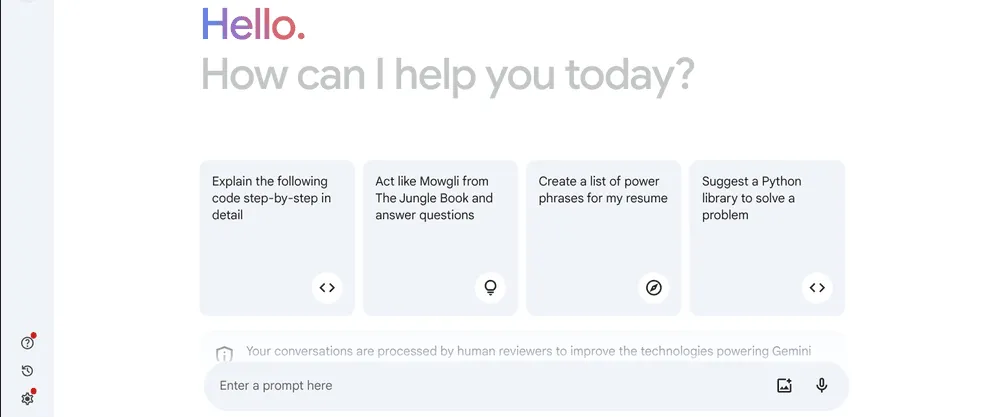
Google Gemini is Google's flagship AI model, built from the ground up as a multimodal system that processes text, images, video, and code within a single prompt. Gemini's 1 million token context window is the largest among commercial models, making it the strongest ChatGPT alternative for tasks that involve mixed media or long documents.
Strengths:
- Native multimodal processing (images, video, code, text in one prompt)
- 1M token context window (vs. ChatGPT's 128K)
- Deep Google Workspace integration (Drive, Gmail, Docs)
- Strong performance on long-context tasks
Limitations:
- Weaker than ChatGPT for non-English languages
- Pricing tiers are confusing (Free, Advanced, Business, Enterprise)
Verdict: Gemini is the best ChatGPT alternative for tasks involving multiple media types or large documents. If you work within Google Workspace, the integration alone makes it worth considering.
2. Meta AI:
Best for Model Customization

Meta AI is Meta's AI platform powered by the LLaMA family of open-source models. Unlike ChatGPT's closed architecture, LLaMA gives developers full access to model weights, enabling deep customization for specific business needs. This makes Meta AI the top ChatGPT alternative for teams that need to fine-tune or self-host their AI infrastructure.
Some experts have raised accusations of openwashing regarding the actual openness of Meta's models.
Strengths:
- Fully open-source LLaMA models (free for commercial use)
- Instagram and Facebook integration for social media tasks
- Built-in AI image generation
- Active developer community with strong documentation
Limitations:
- Openwashing concerns about true model transparency
- Content moderation quality is inconsistent
Verdict: Meta AI is the best ChatGPT alternative for developers who want full control over their model. The open-source LLaMA architecture enables customization that ChatGPT's closed model cannot match. For casual users who do not plan to fine-tune, the added complexity may not be worth it.
3. Microsoft Copilot:
Best for Office Integration
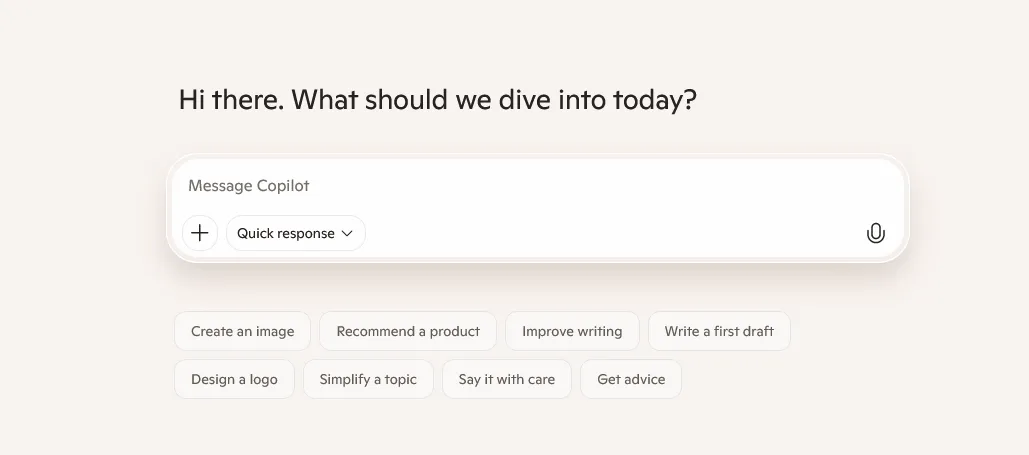
Microsoft Copilot is Microsoft's AI assistant built directly into the Microsoft 365 suite (Word, Excel, PowerPoint, Outlook, Teams). Copilot can analyze spreadsheets, draft documents, summarize email threads, and generate presentations using your existing Office data. Microsoft 365 has over 300 million paying subscribers, making Copilot the most accessible enterprise AI tool on the market.
Strengths:
- Native integration with Word, Excel, PowerPoint, Outlook, and Teams
- Enterprise compliance and audit tools built in
- Email automation and meeting summarization
- Works with existing Microsoft 365 data without manual uploads
Limitations:
- Requires a Microsoft 365 license (additional cost on top of Copilot subscription)
- At $30/user/month, it is expensive for freelancers and small teams
Verdict: Copilot is the best ChatGPT alternative if your team already runs on Microsoft 365. The integration eliminates the copy-paste workflow between ChatGPT and Office tools. If you are not in the Microsoft ecosystem, the licensing costs make it a poor fit.
4. Claude:
Best for Safety and Coding
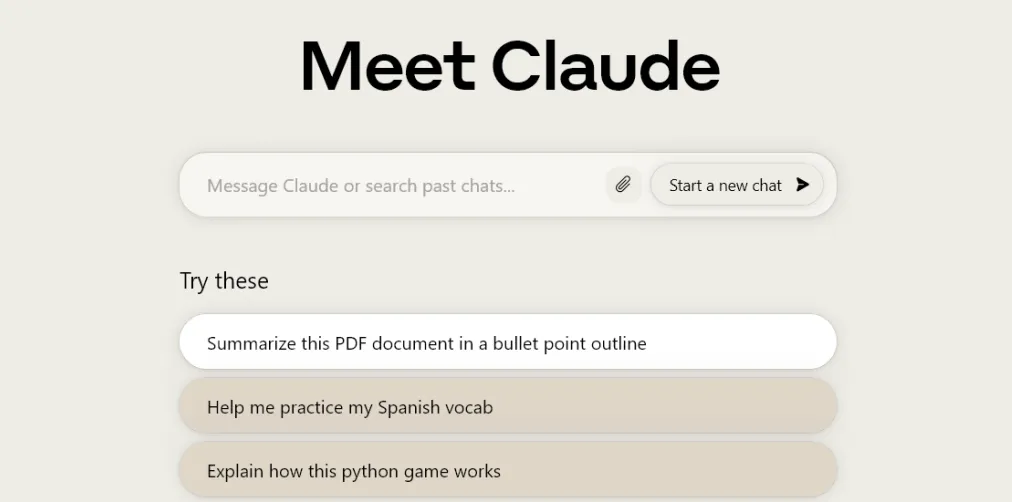
Claude is Anthropic's AI model that leads the industry in both safety features and coding performance. Anthropic's constitutional AI approach trains Claude to avoid harmful outputs, and their ongoing research into preventing jailbreaks makes Claude the safest mainstream LLM available. Claude also ranks at or near the top of major coding benchmarks, making it the go-to model for developers who need reliable, extended code generation.
Strengths:
- Constitutional AI design for industry-leading safety
- Top coding benchmark performance with extended session coherence
- Affordable pricing ($20/month for Pro, matching ChatGPT Plus)
- Low hallucination rates suited for professional environments
Limitations:
- Usage limits on subscription tiers can be restrictive during heavy use
- Latency spikes during high-demand periods
Verdict: Claude is the best ChatGPT alternative for two groups: safety-conscious organizations that need reliable, non-harmful outputs, and developers who need top-tier code generation over long sessions. At $20/month for Pro, it matches ChatGPT Plus pricing with stronger coding and safety features.
5. Perplexity AI:
Best for Research and Citations
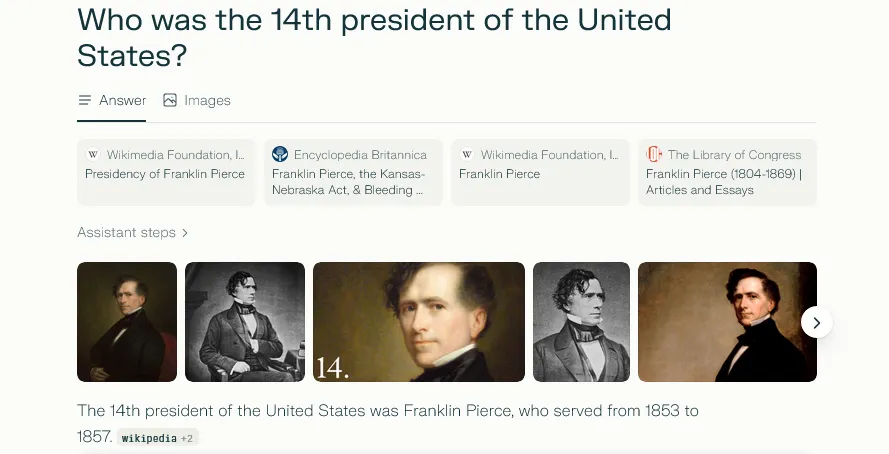
Perplexity AI is an AI-powered search engine that delivers answers with inline source citations. Every Perplexity response includes clickable links to the web sources it drew from, which makes it the strongest ChatGPT alternative for fact-checking, academic research, and any task where source verification matters. ChatGPT can browse the web, but it does not consistently link to its sources.
Strengths:
- Every answer includes clickable source citations
- Real-time web search integrated into every response
- Clean, focused interface designed for information retrieval
- Strong for quick fact-checking and competitive research
Limitations:
- Weak at creative and generative tasks (writing, brainstorming, storytelling)
- Cited sources do not always fully support the claim made
Verdict: Perplexity AI is the best ChatGPT alternative when you need sourced answers you can verify. For researching competitors, checking claims, or finding data points, Perplexity delivers what ChatGPT cannot: traceable sources for every statement.
6. Writesonic:
Best for AI Search Visibility Tracking
Writesonic is a marketing AI platform that combines content generation with built-in AI search visibility tracking. Unlike ChatGPT, which is a general-purpose model with no brand monitoring features, Writesonic monitors how your brand appears across multiple AI platforms and helps optimize content for AI citation.
Strengths:
- Tracks brand mentions across ChatGPT, Gemini, Perplexity, and other AI platforms
- Internal linking automation for SEO
- Direct WordPress export for fast content publishing
- Content generation optimized for AI visibility
Limitations:
- Not useful for non-marketing tasks
- AI-generated content still requires human proofreading and fact-checking
Verdict: Writesonic is the best ChatGPT alternative for marketers focused on AI search visibility. It fills a niche that ChatGPT does not cover: tracking and improving how AI platforms mention your brand. For general-purpose AI use, it is not a substitute for ChatGPT.
7. Jasper:
Best for Marketing Teams
Jasper is the only mainstream AI platform built exclusively for marketing teams. Jasper offers marketing-specific templates, campaign workflows, brand voice customization, and SEO optimization tools in a single interface. While ChatGPT can assist with marketing tasks, Jasper's entire feature set is designed around the marketing workflow from content creation to campaign execution.
Strengths:
- Marketing-specific templates for ads, emails, social posts, and landing pages
- Brand voice and tone customization across all outputs
- Campaign workflow automation
- Built-in SEO content optimization
Limitations:
- Zero value for non-marketing tasks
- Pricing starts at $39/month (higher than ChatGPT Plus at $20/month)
Verdict: Jasper is the best ChatGPT alternative for teams whose primary use case is marketing content. The pre-built templates and brand voice features reduce prompt engineering time. For anything outside marketing, Jasper offers no advantage over ChatGPT.
8. DeepSeek AI:
Best for Coding and Reasoning
DeepSeek AI is an open-source model from China that matches or exceeds ChatGPT on coding and reasoning benchmarks while being completely free to use. DeepSeek's open-weight architecture lets developers modify, fine-tune, and self-host the model without licensing restrictions. Its Mixture-of-Experts (MoE) design uses over 600 billion parameters efficiently, keeping computational costs low even at scale.
Strengths:
- Free and open-source with no usage limits
- Strong coding and reasoning performance rivaling paid models
- Open-weight models for full customization and self-hosting
- Low computational cost through MoE architecture
Limitations:
- Chinese ownership raises data privacy concerns for some organizations
- Missing features other models include (voice interface, multimodal responses)
Verdict: DeepSeek AI is the best free ChatGPT alternative for developers and technical users. If data privacy is not a concern for your use case, DeepSeek delivers performance that matches paid models at zero cost.
Which ChatGPT Alternative Should You Choose?
The right ChatGPT alternative depends on your primary need:
ChatGPT remains the best general-purpose LLM in 2026, but each of these alternatives outperforms it in their specific category. For a full comparison of the AI models powering these tools, see our AI Model Ranking 2026.
ChatGPT Alternatives (FAQ)
What is the best free ChatGPT alternative?
DeepSeek AI is the best free ChatGPT alternative for technical users, offering open-source models with strong coding and reasoning performance. Google Gemini offers the best free tier for general-purpose use, including multimodal processing and a 1 million token context window on its free plan.
Which ChatGPT alternative is best for coding?
Claude leads coding benchmarks among commercial models, with the ability to maintain coherence over extended coding sessions without degrading. DeepSeek AI offers comparable coding performance at no cost. For a detailed comparison, see our AI Model Ranking.
Is Perplexity better than ChatGPT?
Perplexity AI is better than ChatGPT for research and fact-checking because every response includes clickable source citations. ChatGPT is better for creative tasks, long-form writing, and general-purpose conversations. The two tools serve different primary use cases.
How much do ChatGPT alternatives cost?
Most ChatGPT alternatives offer free tiers. Google Gemini Advanced costs $19.99/month. Claude Pro and Perplexity Pro cost $20/month each. Microsoft Copilot costs $30/user/month (plus a Microsoft 365 license). Jasper runs $39-$125/month. DeepSeek and Meta AI (LLaMA) are free and open-source.
Do ChatGPT alternatives work for AI search optimization?
Some ChatGPT alternatives include AI search features. Writesonic tracks brand mentions across AI platforms, and Perplexity's citation model is relevant for Generative Engine Optimization (GEO) strategies. For dedicated AI visibility services, specialized GEO agencies handle AI citation as a core offering.