LLMO (Large Language Model Optimization) is the practice of making a brand the preferred recommendation inside AI-generated answers. This case study documents how Red-engage applied its full GEO stack (with LLMO as a core component) to help a B2B leader in the professional kitchen supplies industry transition from being a standard Google search result to becoming a verified authority within AI platforms like ChatGPT and Google AI Overviews.
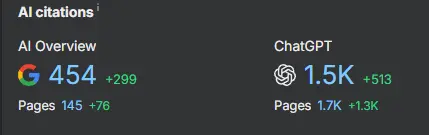
The campaign earned 65.8% of the brand's all-time Google AI Citations in a single period, generated +1,300 new unique pages deep-linked by ChatGPT, and positioned the brand as a top-2 authority against 6 direct competitors tracked via AI visibility tools.
In 2026, ranking on Page 1 of Google is no longer enough. 29% of B2B decision-makers now start vendor research through AI tools rather than Google (G2, 2025), and AI-referred traffic converts at 14.2% compared to 2.8% from traditional search (SimilarWeb, 2025). If a brand is not cited inside the AI answer, it is invisible to this growing buyer segment. This shift is what makes Generative Engine Optimization and AI search visibility critical for B2B brands.
What Were the Headline Results?
Red-engage's LLMO campaign for the kitchen supplies brand delivered three measurable outcomes:
What Challenges Did the Brand Face?
The kitchen supplies brand faced three challenges that traditional SEO could not solve:
1. Google AI Overviews displaced organic clicks. Google AI Overviews began appearing at the top of search results for the brand's core product queries. If the brand was not cited inside the AI summary, professional buyers never scrolled down to the organic listings.
2. AI recommendation gap. Professional buyers started using ChatGPT to compare technical specs (e.g., "best energy-efficient combi-ovens for commercial kitchens"). The brand had strong Google rankings, but its specific products were not being recommended by AI models.
3. Deep-link invisibility. High-intent queries about specialized, high-ticket equipment returned competitor products in AI answers. The brand's individual product pages were not indexed in AI knowledge bases.
What Strategy Did Red-engage Use?
Red-engage's LLMO strategy targeted the two trust signals that AI models weigh most heavily: community-verified authority and platform diversity.
1. Reddit Dominance and High-Authority Integration
Reddit dominance: AI models retrieve a large share of their recommendation data from Reddit discussions. Reddit is the most-cited source by AI models by a margin of close to 20% (Visual Capitalist). Red-engage, through its GEO stack with Reddit-native authority building as a core channel, integrated authentic brand mentions and technical product discussions into relevant culinary and equipment subreddits, ensuring that when an AI model searches for community sentiment about kitchen equipment, the brand appears as a primary recommendation.
High-authority integration: Red-engage mapped and placed specialized content on top-tier industry platforms that AI models already trust as primary sources. This created organic retrieval paths where AI models pull the brand's data because it is hosted on sites the model treats as authoritative.
2. Prompt-Level Performance Tracking
Red-engage transitioned the brand from keyword-based tracking to prompt-level visibility monitoring:
- Competitor benchmarking: Red-engage tracked the brand's AI citation performance against 6 direct industry competitors across ChatGPT, Google AI Overviews, and Perplexity using LLM visibility tools.
- Iterative enhancement: Red-engage monitored the brand's Position Score and Sentiment Score across high-value prompts (e.g., "best commercial kitchen equipment brands"), then adjusted content and community strategy based on weekly data cycles.
What Did the Results Show?
The data confirmed a measurable shift in how AI models perceive and recommend the brand.
AI Citation Growth (Google and ChatGPT)
Competitive Visibility Metrics
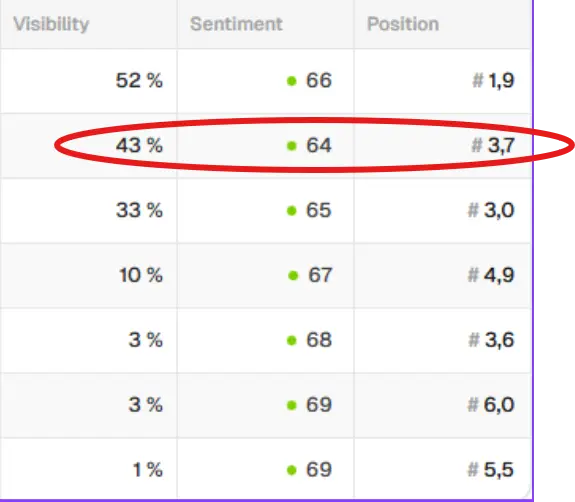
By tracking visibility against 6 direct competitors, Red-engage positioned the brand as a top-2 authority in its category:
What Does This Case Study Prove About LLMO?
This case study proves three things about LLMO in 2026:
- AI visibility is earned through trust, not keywords. The brand's Google rankings did not change during the campaign. What changed was how AI models perceived the brand's authority, driven by community mentions and platform diversity.
- Reddit is the most effective channel for AI citations. Red-engage's GEO stack (Reddit-native authority building is a core channel) created the community trust signals that AI models prioritize when selecting which brands to recommend.
- Prompt-level tracking replaces keyword tracking. Tracking how a brand appears across specific AI prompts is now the most accurate measure of digital visibility for B2B brands.
The brand has transitioned from a Google search result to a verified AI authority in the professional kitchen supplies market. As AI-driven procurement grows, this positioning compounds over time.
LLMO Case Study:
Key Takeaways
- Red-engage's LLMO campaign generated 65.8% of the brand's all-time Google AI Citations in a single period.
- ChatGPT deep-linked to 1,300+ new individual product pages during the campaign.
- The brand reached 43% AI Visibility and a 3.7 Average Position against 6 direct competitors.
- Community authority building through the Reddit-native trust channel (within the broader GEO stack) was the primary driver of AI citation growth.
- Prompt-level tracking (not keyword tracking) measured and guided the campaign's progress.
Want similar results for your brand? Contact Red-engage to discuss how LLMO can work for your industry. Learn more about GEO services, AI search visibility, or how the ChatGPT ranking system works.
LLMO Case Study (FAQ)
How long does an LLMO campaign take to show results?
Red-engage's LLMO campaigns show measurable AI citation increases within 45-90 days. The kitchen supplies campaign generated 65.8% of all-time Google AI Citations within a single campaign period. Timelines depend on the brand's existing online authority and industry competitiveness.
What is LLMO?
GEO (Generative Engine Optimization) is the practice of making a brand the preferred recommendation inside AI-generated answers from platforms like ChatGPT, Google AI Overviews, and Perplexity. GEO combines technical AI readiness (schema, llms.txt, entity consolidation), content structuring for extractability, authority signal building on sources AI models trust (including Reddit), and prompt-level performance tracking. For a full guide, see Generative Engine Optimization.
How does Red-engage measure AI visibility?
Red-engage tracks three core metrics: AI Visibility (percentage of AI responses that mention the brand), Average Position (where the brand ranks in AI recommendation lists), and Sentiment Score (whether AI models attach positive qualifiers to the brand name). These metrics are tracked across ChatGPT, Google AI Overviews, and Perplexity using LLM visibility tools.
Can LLMO work for industries outside kitchen supplies?
LLMO applies to any industry where buyers use AI tools to research and compare products or services. The methodology (Reddit authority building, platform diversification, prompt-level tracking) is industry-agnostic. Red-engage has applied similar strategies across B2B SaaS, e-commerce, and professional services. See more results on our AI search visibility page.
How does LLMO differ from traditional SEO?
Traditional SEO optimizes for Google search rankings. LLMO optimizes for AI-generated recommendations. SEO drives organic clicks from Google, while LLMO drives brand citations inside ChatGPT, Perplexity, and Google AI Overviews. In 2026, 65% of Google searches end without a click (Bain), making LLMO critical for brands that depend on search-driven revenue.